Thursday, December 5, 2013

Is Advertising Today Causing more Parents to Spend Excessive Amounts on their Child?

Take a moment and think; do you feel like children today are being exposed to more advertisements on a daily basis then any previous generation?  The obvious answer would be yes, because when we compare children today to any previous generation we can see that children today are "more spoiled" than any other generation.  You might be wondering what "more spoiled" is suppose to mean, think about it, many parents today just give their child whatever they want just to ensure they are happy.  According to different parenting sites, three out of every four parents spoil their children.  According to the UK Daily Mail, parents admit to spoiling their children because they feel bad for working long hours or because their children are telling them that everyone else has it and they will be picked on without the item.  

Never before in our history has so much technology been available for young children allowing them to be more susceptible to advertisements without parents even knowing.  Children today have mobile phones, Ipods, laptops, and a variety of other electronics they carry with them everyday.  As a parent you are probably unaware of what your child is accessing on these devices 24/7, but you should be aware that marketers are targeting your child through these devices.    
Barbara A. Martino, an advertising executive, says, “we’re relying on the kid to pester the mom to buy the product, rather than going straight to the mom.” 

Successful marketers who aim to market to children do so by pursuing the child and then using the word of mouth approach to promote to the child's friends.  How is this done?  Marketers know they have successfully completed this when children start to say this product is "cool."  This is how fads are started, and anyone who believes the product is "cool" will promote the product to their peers, and this cycle will continue until other peers start to say this is no longer "cool."  Anyone who is older than 15 can probably remember the same fad I grew up with: the Silly Bands.  Passkey Design, a Japanese company, created Silly Bands in an attempt to make additional revenue, and their marketing team promoted these bands as being "cool."  Children in Japan thought these were some of the coolest things in 2003 and started the fad.  In 2005, the USA had joined the fad, and it seemed as if every person in elementary and high school had to have these bands.  First, the popular children started with the bands and then everyone else seemed to follow their footsteps.  If you did not follow their footsteps you feared getting picked on and being left out, or your family was viewed as being in poverty.  By the time the fad ended, the Japanese company made millions; parents throughout the world were pursued by their children to buy them these "cool" bands. 

This video clip shows a variety of different ways cereal companies are creating a "cool" concept in your child's mind.


Though what most parents might find surprising is the amount of exposure their children are receiving from the very place they are trying to obtain their education from.  The worst part is parents have no control over the exposure that occurs at their child's school where most children are must venerable to these advertisers just because of peer pressure.  Think, has there ever been a time where your child has come home from school with a coupon for a particular business?  Maybe it wasn't a coupon but rather a free gift because of some program.  When I was little Pizza Hut always use to give a free personal pan pizza to each child who read a certain number of books or pages each month. You may never have thought of these types of programs as being a form of marketing but you would not just go to pizza hut and get a personal pan pizza.  No, usually you will take the family and sit down and eat a whole meal while using your free personal pan pizza coupon.  How about the box top program?  If you think about the whole program in the end your school gets money but first you need to buy the supporting brands.  This is another way those brands are promoting you to buy their products.  

You may be wondering why schools are letting other companies advertise to your child but the reason is obvious.  Take a moment and think about the government system and schools throughout the United States.  Every year school funding continues to decrease because there is not enough money to sustain our current spending habits with the amount of debt the country is in.  Keeping that in mind, schools need to do something to come up with the extra money to support the new teacher's budget, pay for new computers, or  buy the latest software.  Knowing this some schools will directly sell your child’s personal data to a marketing company in return for the ever needed funding or new items that are needed throughout the school.  Other schools refuse to sell your child's information and in return promise the company they will send out a particular company coupon or voucher.  

By now, you might be thinking this is cruel of schools but it is the only way they can get access to these funds and parents throughout the country are not stating their disapproval.   If I had a child in school right now, I would be upset if everyday they came home asking for new items just because of the advertising they were exposed to at school.  If this type of behavior happened on a regular basis I would have a conversation with my child about how they need need to save their allowance to buy that new item.  That way they will learn to understand all the hard work that goes into buying some of the items they think they need to have but really do not need.  But 75 percent of parents would not have this conversation and would buy these products out of guilt or pity.  Which is exactly what marketers want but what types of lessons are these parents teaching their children?   

If parents give their children everything they ever wanted then the child is learning that they do not need to work to earn anything and rather mommy and daddy can always buy the products for them.  So remember it’s not just about what companies are marketing to your child its also about the lessons you are teaching your child.  Ask yourself if you would be okay with your child being spoiled and never working for what they want and not developing a full understanding of what responsibility really means?

This video is a prime example of the message I am trying to convey about the lessons you are teaching your children.


My all-time favorite way that McDonald's tries to advertise to children started June 1979 and the company has been globally successful in doing so.  Can you guess what McDonald’s did?  This is when McDonald’s first started offering toys to children in Happy Meals.  According to USAToday, this brilliant tactic has allowed McDonald's to increase sales by 20%, while making both parents and children happy.    

These toys are one of the most significant ways a movie company can target children.  Companies that try to get McDonald’s to offer one of their toys such as Toy Story and the Incredibles must pay McDonald’s to sponsor their toy and the manufacturing costs associated with the toy.  That is just one way movie companies are trying to cut the clutter; in return they hope to have pursued the parent to buy their movie, other toys, games, and much more.   

Pay attention to this chart.  This is the amount of money just 10 of the top known restaurants are choosing to spend targeting your child.
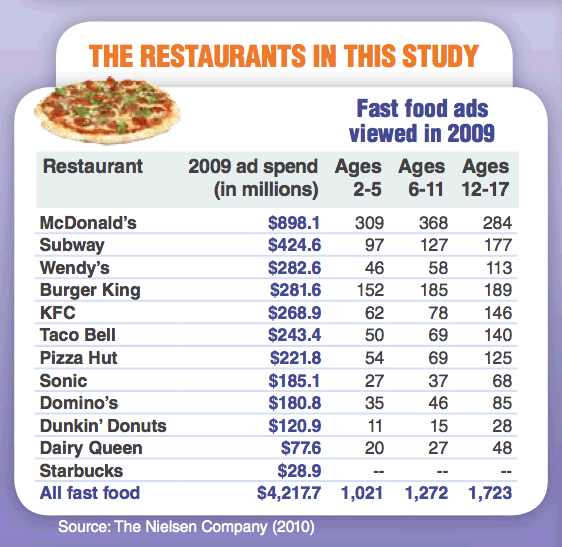


In the end, there is not much parents can do to eliminate these marketers from advertising to their children, but they can change the way their child looks at these commercials and teach them the responsibility of spending some of their own money to help them understand if something is really needed or only wanted. You can block sites on your child's web browsers to prevents some popups and marketing from occurring to your child but it will never be possible to eliminate all the marketing.  

Saturday, November 2, 2013

Has Advertising Gone Too Far?

If you are like most modern Americans and have learned to incorporate internet into your everyday ritual, you may be surprised to know that you are being exposed to more than 1,700 banner advertisements every month.  The worst part is if you think this is a lot of exposure to advertisements you might be surprised to find out that everyday you were exposed to more than 3,000 marketing impressions.  You might be questioning this notion but remember marketing impressions are portrayed in a variety of different mass media outlets including banner ads, direct mail pieces, magazines, newspapers, radio, television, billboards, and through a variety of other means. 

This may seem like a lot of impressions but for most people, even myself, we tend to forget about most of these impressions by the end of the day unless the advertisement left a meaningful impression that made you remember its message.  

Take a minute and try to recap how many impressions you were exposed with so far today.

     
  So far today I was exposed too:
General Mills cereal box
Kemps Milk
A variety of different campus food stores where I purchase lunch
Campus advertisement - wall posters, email notifications, radio announcements
25% off Clothing - One Day Sale
Direct mail advertising for Ace Hardware
A variety of popups on my computer
Advertisements on the side of websites I am viewing
Email advertisements for new products
Facebook advertisements
Exposer hundred's of students  brand named items
and much more that I cannot recollect

However, if I was not paying close attention to the types of advertisements I was exposed to today, I would have a difficult time coming up with this list because most of these forms of advertisements have no effect on us.  The idea of tuning out an advertisement is not uncommon and at the end of the day most people will only remember five advertisements for the entire day.  With this being said successful advertisers must be able to cut through the clutter so that you will remember their message. 


The companies who are cutting through clutter are using a variety of different approaches to reach their target market which I will describe below.  When you are watching these advertisements ask yourself does this make me want to buy the product or support the cause, if so why?  I also want you to think about weather or not these advertisements is effective at reaching the audience; finally, I want you to ask yourself if this is morally ethical and a reasonable way to advertise to the public.  


These first advertisements use an experience the feel appeal.


Evian


I would say the goal of this commercial was to make the audience laugh while portraying the message: Drink Evian and feel young and energetic again.  The company wants to make sure that you remember their commercial but do you think that this is an effective way to sell water?  I would tend to think that this did not make you want to purchase water, it might have made you want to get out and be a child again or exercise but most people do not say that was an amazing commercial lets go buy Evian.  This particular commercial would be something that the audience would enjoy watching but it does not seem like an effective way for Evian advertising budget to be spending their resources if they want to gain more customers.  


Taco Bells
Warning: This commercial is generated in Spanish but you will still be able to understand the message.


We can see that this advertisement is directly targeting anyone who is in the baby boomer generation.  In my mind this commercial is brilliant because most companies do not advertise to the older generation in this fun-flashback way but I would tend to believe this commercial would make people want to buy more Taco Bell.  Though it would depend if this commercial was aired before lunchtime during a show where the target group was in their fifties and sixty this might just determine where they might go for lunch.  

These next commercials use an emotional appeal to convince their audience members.


Feed the Hungry Campaign


This commercial is made with the intent to target your emotions.  Emotional advertising seems to be the number one way to create an effective advertisement.  No matter how much money you have this commercial makes you appreciate what you have been given and makes you want to donate money to help these needy children and other children like them.  The reason why this particular campaign can be very effective is because of the images and the messages portrayed.  The goal is to make these images gruesome enough to make you want to donate money and make you feel like you are obligated to help these people.  Should this commercial be allowed to air on television?  This can be controversy because some people would think no because these commercial can be hard to watch and if a person does not have much money it can be hard for them to donate.  On the other hand they need to be allowed to air because without monetary support these companies would not be able to make an impact in these children's lives and it takes supporters like yourself to ensure these organizations continue to run.   

Anti-Smoking - PSA


Out of all the commercials I have displayed so far and will display this commercial/PSA is by far the most effective in my opinion.  This Anti-smoking PSA is brilliant and I believe it is especially effective for parents with young children who smoke because if they truly love their child they will now think twice before lighting their next cigarette.  

**Background about this PSA:
The goal of the Anti-smoking campaign with this commercial was to help 20,000 people quit smoking.  For this PSA the little boy did lose his mother in the subway station for a minute and they filmed what the child would experience without the parent.   

Wear your Seat Belt - PSA


This PSA uses an emotional appeal which we can see at the end of the commercial when the child and the mother reach out to help the father fasten his seat-belt as he is getting into an accident. This PSA seems to be effective because it makes you think about all the people you love and how you do not want to lose them or get yourself in an accident because of not wearing a seat-belt.

These next commercials uses sex appeal to sell their product.

These commercial are not quite like the ones above but they do spark buzz but not always in a good way for the company.  Remember earlier how I asked you to think about if the commercials you were viewing were ethically morally?  Now think about whether or not these commercials should be allowed to air on national television and throughout the internet.  

Skittles


Warning: this video may be taken offensively and if you believe it will disturb you please do not watch.


SEXplosion Skittles Candy (Look closely)
This commercial was released right before the 2013 Super Bowl and I find it to be crude and very upsetting.  Personally, I believe the reason why it is so offensive is because of the fact that is comes from such a well recognized children's candy company, Skittles.  The commercial itself was banned from national television but is still viewed by millions on YouTube.

Though this commercial does not seems to surprising me after their 2010 series of Berry SEXplosion skittles they sold in stores in 2010.  Even at my age I still find this commercial and the candy container to both be disturbing; with that being said the way the company chose to portray themselves makes me no longer want to purchase another pack of Skittles.  I find there to be no reason for a children's candy company to need to utilize the "sex" appeal in their campaign even if the motto is: sex sells.  What I find even more disturbing is that this is not the only commercial the company has had banned for this reason there are at least five more available for viewing on YouTube.  

Carls Jr. / Hardees


This is just one of Carl's Jr. and Hardees many 2013 banned commercials for being too sexy.  Seriously, ask yourself why a burger much less "Fast Food" burger needs to be portrayed this way?  The reason the company does this is the same as why Skittles did it because they believe sex sells.  This particular commercial has a few issues that arise when you watch it.  The main one is in the mind of the audience the woman is just an object and they are not treating her with respect which could potentially turn women away from the company if that is what they believe.  Secondly, the company uses a sexy woman to sell a fast food burger seductively which just does not happen when anyone eats a burger and the company is giving this false impression about their product.

I had to add this next commercial because I wanted to show you a prime example of an advertisement that has gone astray.  The company managed to create a commercial where they lost their message in all their clutter.  
Old Spice


Ask yourself, does this make you want to buy Old Spice?  For me this commercial does not make me want to buy Old Spice and I would not recommend Old Spice to others based off this commercial alone.

From a marketing standpoint I would be reluctant to say this advertisement increased sales.  The reason I say this is because the advertisement does not make the product stand out because they are hiding it behind to many other things.  This was similarly shown in both the Taco Johns and the Evian advertisement we viewed.  These advertisements do get the companies name out but they fail to sell the product and at the end of the day these advertisements would be considered unsuccessful at marketing their product.

These were just a few ways marketers tend to advertise to people through the television or internet.  There are many other forms of techniques advertisers use to try to sell products we tend to know what some of these other forms are but let's look at a few that probably did not create the message the company was looking for.  

Let's first look at a billboard.  Do you notice anything wrong with this?


When viewing this I am hoping the first thing that went through your mind was the fact that this is the worst type of product placement a company could ask for and it will not increase KFC's sales.  The massage that is created for KFC is worse than if the company would not have placed their billboard here.  What they should have done was either take down their sign or moved it so it did not read like KFC is the number one heart disease killer of women. 

Know let's look at a Vitamin Water cap which was sold in Quebec, Canada.


To you and me this message would be taken in an offensive way and should not have been put on the inside of a bottle cap.  What neither of us realized was that this was part of Cokes large make a sentence campaign where people who created and then submitted the best sentences won a prize.  Another thing we need to remember is because this product was sold in Quebec where the native language is French the word retard translates into the English word late.  That is one of the issues that global companies have to deal with because of the different language barriers that apply within different countries.

All the different things I mentioned and commercials we looked at earlier are just some of the ways we are being targeted by the media.  Even in the privacy of our own homes the media is still everywhere and most people tend to find it to be sickening.

So back to the original question Has Advertising Gone Too Far? Most people tend to agree that advertising has gone so far that we just try to tune it out.  If you look at the image on the right you will notice this is just one building in New York City.  It is really sad to think that companies are pouring out millions of dollars a year to place their ads in places that we the people are just sick and tired of seeing them.  What we all want is just one day where we can go around doing our own thing without someone trying to sell us something and we can make up our own decisions.  I understand that companies need to make money to profit but why don't I, the consumer, get to make my own choices on what I want to purchase and not have to constantly be bombarded with different advertisements everyday.

The last thing I want to leave you with is the question do you control your money or do advertisements and commercials.  I would urge you to spend a little more time thinking about what you want to purchase before spending your money on impulse items that you will just regret purchasing later on.

I would like to give credit to YouTube for providing us with a variety of different commercials we could view.

Thursday, October 3, 2013

Why Marketers are Failing to Attract College Students Attention

Photo complements of Up Scale Marketing
Each and every day, increasingly higher levels of difficultly seem to arise with companies being able to effectively market their products to college students.  It appears as if their marketing efforts are running the company straight into a brick wall.  Companies are noticing that the students are no longer fazed by their marketing strategies. 


What Are Marketers Doing Wrong?

Paul Himmelfarb, the Youth Marketing Connections manager at West Virginia University, believes he knows the number one reason why marketers are failing to attract the college student.  He says, “College students are wary of old-school marketing.”  He states that it is virtually impossible for a company to target a college student if their marketing tactics are a few years old.  College students today are not like previous generations of students, if companies want to successfully market their products to this demographic they need to understand how a college student's lifestyle is and take that knowledge and apply it to their advertising strategies.

Successful marketers use social media, coupons, food, discounts, and modern electronics as their means of advertising. 

Large companies are starting to understand that college students are an essential factor if their company wants to increase profits in the long-run.  The reason for this is due to the fact that most students tend to have money to spend.  Most of this money comes directly from parents or from student loans, and if the right item catches their eye most are willing to buy the product out of impulse.  The number one targeted segment of the student demographic for these advertisements are freshman, due to the fact freshman are leaving home for the first time and have poor money management skills, they are more willing to buy products off of impulse rather than need.  According to the Alloy Media and Marketing project, during the 2012-2013 school year students spent $74 billion dollars on non-necessity items and it is projected to increase to $76 billion for the 2013-2014 school year. 
Image taken from bizreports.com

More and more companies are discovering that their marketing strategies would become useless if it were not for the peer marketing concept.  Many students would agree that they will purchase certain items so that they do not feel excluded.  Think about if there was ever a time you went out to eat with all your friends and ordered something even though you were not hungry.  That's an example of the peer marketing concept.

What Are Marketers Doing To Ensure Students Are Buying Their Product?

It’s quite simple.  They are simply advertising with the group concept in mind and each company does this in a slightly different manner.  Try to recall the last commercial you watched that was aimed towards students. All these commercials seem to have a group of students making the product look “COOL,” or they talk about how useful the product is. 

One company that does an incredible job at targeting students and making them believe that their product is essential for everyday life is Apple.  I have attached an eight minute video clip of some of Apples best commercials.  In this video clip you will see how Apple chooses to persuade the viewers into believing they need to purchase this product.  In addition, look at how most of the newer commercials show the complexity of having different colors of the same product such as the IPod.  What this does is demonstrate to the customer that they can purchase a product that is colored uniquely to them and not just buy black and white like most other electronic brands.


Another way companies market their product is by directly going to the student.  For example, this fall a senior marketing communications student at Washington University was paid to represent American Eagle throughout her campus.  In attempt to persuade students American Eagle gave her a pair of flip flops for each new student.  Her task was to make an impact on the students that would make them believe American Eagle is unique or special. She accomplished this task by giving every freshman who attended orientation a free pair of flip flops ($15 value) and a coupon for 15% off all in store purchases made within the next 30 days. 

The reason this marketing strategy works is because all the students who are wearing their flip flops are now advertising the company wherever they go.  Another reason is because the coupons inside are only good for a short period of time drawing the student into the store if they wanted to use American Eagles coupon.  This strategy makes students buy out of impulse, so they purchase a product they do not need, just to utilize the coupon.  American Eagle is not the only company who advertises this way.  

Another company that takes advantage of college campuses is Red Bull.  The company has over 250 different college campuses that they have representatives at the beginning of each school year that hand out individual samples to all students ($4 value).  By marketing this way they know that some people will never buy their product, but there will be others who become hooked on the product that might have never tried Red Bull without a free sample to begin with.   

Most marketers today are taking advantage of news feeds.  The trick to using news feeds is releasing them early in the morning or during the evening because otherwise the audience will be too distracted with everyday life, work, classes, sports, and other activities that they will not have time to pay attention to the feed. 

Another way college students are targeted by companies is through social media.  Everyday students through the entire world are checking Facebook, posting messages, looking at what their friends liked, Tweeting, surfing YouTube, and much more.  The trick to advertising on these sites is to target them during the academic year when most students have more time because they are not working or holding an internship full time and have more time to explore these advertisements or at least watch the first few seconds and see if the product interest them.  

The final example I will tell you about today is with the company Kwik Trip.  The company targets college students all the time by offering hot and ready, affordable food and gas.  They target students through mobile technology in two different ways.  They are one of the few companies that when you text them they will reply back and let you know if gas prices will increase or decrease today.  In addition, they only let you use their website coupons if they are on a mobile phone app.  With this being said these coupons are exclusively available for data phone users.  

From this we can conclude that marketers of the twenty-first century have learned to branch away from old-school marketing techniques in order to successfully market to this new generation of college students.  Companies today give out free product samples, coupons, and utilize online resources for almost all of their marketing strategies.  Lastly, companies today sell products only after they have made the consumer believe that their product is essential for everyday life.